Featured

Warm Up!

It’s been a while. I know I am confident that getting back to school was like the same feeling 21 years ago, but I was mistaken. This is completely different in so many levels.

I recalled I have not finished a book since I started working night shift. Recently, I get bored on lengthy readings because possibly, I started to get the habit of only browsing write ups and stories from my phone which will not require me to spend an enormous time. Also, time pressure is never like this way back. The sense of urgency seeps through even when I am at work. I’m still in the process of managing that and I’m sure, I’ll handle it soon.

I thought I knew plenty but I totally realize I know less. The week’s learning was simply the foundation but it got me to think things in different angles and made me question myself. It prompted me to do some diggings to satisfy my curiosity. This was a excellent mental exercise that warmed up my critical thinking and outlook.

“Oh, so this what it feels like!”
They say, you are never prepared enough for anything. I’d like to thinks that it’s true. Good thing, I am emotionally prepared for this journey. Now, it’s never about the money in order for me to go to school but my certainty and resolve to win this over.

I will be a professional educator and I am only starting. That is a non negotiable I set for myself.

The top challenge I have for the week was the loss of power for almost four days due to the the volcano threatening to erupt any time now. I have a deadline to meet! Quitting never came to mind though. I became resourceful.
I am grateful to have a generous company that allows us to use an internet connection for meaningful purposes. During those days when I cannot even power up my laptop, I head to work 2 hours early before my shift to do some catching up.

Now, I am getting the feel of how my journey progresses for the rest of the semester. I am amazed on how my co learners perceive ideas and share their thoughts by readings their posts. In a way, I get to know them a little bit and I am liking this group of people I am learning with.

Looking forward for the upcoming week’s learning adventure.

I only just begun.

Into the Horizon

From a needle-size peep hole vision, I came out to see a wider perspective of a broad horizon that I embarked on.

Understanding learning’s intricate and complex processes was surprising to me at first. I never thought there could be such enormous research, debates and studies on learning alone.My impression of learning is as simple as knowing – raw and superficial. Obviously, I lack the in-depth understanding of what learning is. I could say that enrolling in EDS 103 was a sure hit eye opener. 

While I was following each learning theory, I developed this mindset of always reflecting it to my previous school experience and at the same time, finding the concepts in the work setting. Learning the theories made me understand what makes people tick and why they act the way they do. I also come to accept the fact that in a classroom or at work, everyone thinks on a unique level and that we learn at different pace and it should be considered at any point by a teacher. I began to appreciate the teacher or the manager’s patience and creativity to deliver certain messages and impart knowledge in various methodologies. There were plenty of aha moments during this course and several enlightenments at the same time. 

On the other hand, the thought-provoking questions in each activity taught me to become more resourceful and to faithfully seek for a higher understanding of matters in discussion. I learned to follow my own line of thinking as if I am in discussion and in lecture with myself. Funny, but I find that method comforting and more personal. I noticed myself seeking alternative perspectives every time and I must admit, a simple activity question will take me more than a day to finally draft an answer because of that. I realized I began to adapt to the method of how I can maximize my learning potential in an open education setting. 

It was a huge achievement to learn and integrate the theories of learning in my future endeavor but most importantly, EDS 103 prepared me the essential mindset of an educator and an open education student for the semesters ahead, 

Now, I can confidently say that I made a basic strong footing in order to continue and finish my aspiration with  UPOU. 

Epistemology of Coaching

My epistemological beliefs evolve along  with the changing expectations and studies. They may also vary depending on the discipline of focus. I would like to step back and examine the most commonly used method of learning in my line of work – coaching. Coaching plays an integral part in a BPO company because the business continuously drives results coming from the productivity performance of every employee. I would like to reflect on the way I see coaching before and how I perceive it now.

What is Coaching?

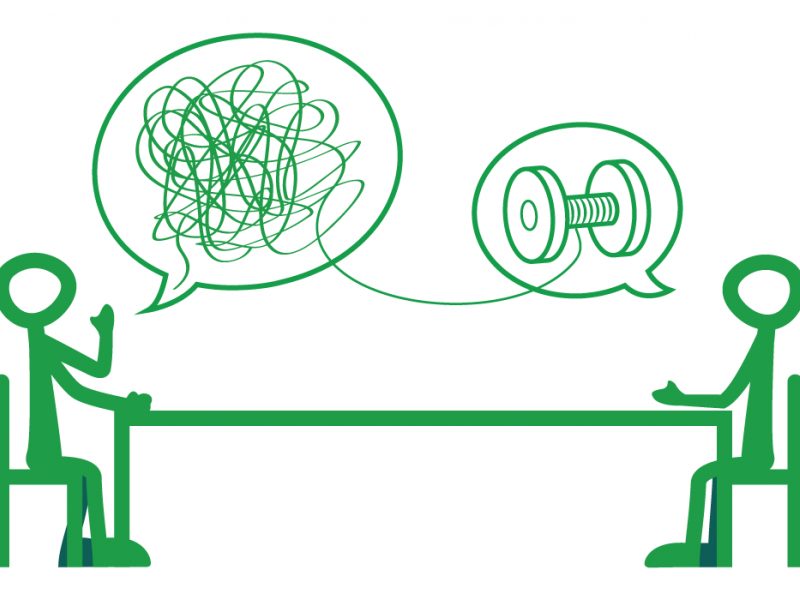
According to John Whitmore, Coaching is unlocking a person’s potential to maximise their own performance. It is helping them to learn rather than teaching them. Although there are various ways to define coaching but in essence, coaching is :

  • To help a person change in the way they wish and helping them go in the direction they want to go
  • Coaching supports a person at every level in becoming who they want to be
  • Coaching builds awareness, empowers choice and leads to change

Prior to me joining BPO, coaching for me is a reprimand. It’s something that leaders do to call out someone and teach them. Simple as that. Coaching a colleague at work is something I refused to do before because I thought, I don’t know any better. Coaching a direct report is all about the numbers and the refreshers but soon I realized it’s more than that. 

There are 2 common consequences when coaching is utilized in the workplace. In this post, I will highlight my epistemological beliefs about what coaching is, how it is done, how it influences my method in a setting wherein I have to coach a peer and a direct report.

Coaching a colleague

Coaching a peer at work is like coaching a sibling but ideally, you have to stay professional and objective with what you need to coach on. Also, there is a professional way of providing feedback which is structured into a STAR (situation/task, action, result) format to ensure that feedback giving is complete, professional and objective. If the behavior or action needs improvement, structure is STAR-AR (situation/task, action, result, alternative, result).

Feedback giving is most important especially if you feel that you have a moral obligation to let someone know about their actions and behavior to make them aware, giving them a chance to improve. Based on  experience, not all welcomes the idea of being called out but there are those who are grateful.

Coaching a direct report

When coaching a direct report or a subordinate, as a leader, you have to consider that the coaching serves the purpose of improving his performance. Coaching can be in the form of a refresher, a teach back, a feedback of an output or performance but with the goal that at the end of the session, the direct report comes to a self-realization to drive a change in behavior and eventually performance. 

If you are a manager, you must have the competence, ability and humanity to provide coaching that both benefits your team’s performance and will have a bigger impact on the direct report’s outlook and behavior. 

Conclusion

Based on how I experience the shift on knowledge and understanding of coaching through exposure, training, talks, readings and experience, I can identify that indeed, epistemological beliefs do change. Epistemology is variable but transformative. It changes to suit the needs and demands and it gets better or evolved to lead a different understanding of the concept.


What is Coaching? Retrieved from: https://www.skillsyouneed.com/learn/coaching.html

Leading through Change

Understanding the components of a successful learning and its limitations made me question why for the longest time, the changes that I have been thinking about have not been implemented in terms of teaching approach, assessment strategies and teachers’ competency development.

Teaching approach

Classroom learning must encourage a learner-centered environment wherein the students lead the discussion and learn to learn in a social setting and teachers are seen as guides for direction. Learner-centered approach to teaching is not very popular during elementary and high school education but is only introduced during tertiary education. It’s important that this approach be incorporated during formative years but unfortunately it’s been a struggle to come up with learning instructions and materials that support this method for young learners. 

Assessment strategy

Assessment can be given in various methods but what I was thinking is it’s versatility and flexibility when it comes to assessing a learner’s progress by comparing it to everybody else in class. Remember, every student learns differently and each child takes in knowledge uniquely hence, when providing an exam, is there a way that we categorize students in class based on their learning style or learning curve. 

Teachers’ growth 

Teachers’ learning does not end when they land a job at school. Aside from the fact that they learn to be more adept to the learners’ needs, they change or improve their teaching style and instructional materials. Most importantly, teachers deserve to develop their presentation skills, communications skills and other competencies. 

So as the new breed to educators, what can we do? 

Personally, never stop advocating for these changes. We are problem solvers, critical thinkers and we should lead through change. Right now, we will continue to propose what we think and rally our voices in the hope that it will be heard one day.. Changes may not happen overnight but it can occur in increments. As teachers, we will lead. Let student data and feedback inform learning decisions. Also, we should continue to create “innovation labs” in schools to create more problem solvers. Let teachers be learners too. Learning is indeed an active process and it’s never ending. It goes on in a loop that expands and evolves with culture, time and technology.

Constructivism in the Mirror

Let’s reflect on the pond.

How constructivist am I?

Freedom and empowerment. These are the two ideologies I personally advocate for. From my upbringing up to the choice of tertiary education, I was introduced to a constructivist environment. At home, I get all the support I need with the encouragement that I can always do better hence, I am free to explore. I learned how to work with other people, lead peers and collaborate productively. During college, I was supported by the curriculum and the approach used by my mentors which further helped me develop an inquisitive mind and liveral thinking. 

When presented with a certain topic or an issue, I wrap my mind around potential questions that may arise – always wanting to be a step ahead. Anticipating potential problems makes me feel secure and always ahead of the game. One source is never enough. One angle is not sufficient. My thought is, there are different stories in a picture and making a conscious effort to know what those are is my personal commitment and responsibility. 

How can I become a better Constructivist?

No matter how resourceful I can get, I always wanted to improve on how I can work better with other people. Not that I fail on it, but I feel that I need to expand my network and not limit my professional relationships. I have hesitations due to experience but in reality, if I want to be good at something, I need to work with other people. This is what I am currently trying to work on in lieu to my promotion. It is an advantage that I am creative in finding resources but in order to thrive, I must be open to working with various types of people even those that ideals are opposite to mine. 

How may I influence education practice to shift towards constructivist ideology and practice?

In order to create a paradigm shift, it will take time and results driven experimentation. I believe, there were plenty of studies and proposals made on how to deploy constructivism in the classroom but in order to make it happen consistently, we need proof that it is indeed, quantitatively and qualitatively effective.

When I become an educator one day, I want to be a teacher that will be remembered from my method – unconventional and impactful. I would like to take part in how we can revolutionize learning methods, materials and instruction by offering my resources, knowledge and insights. Today, I may not have much power to make an inch of a change, but maintaining my method consistently and sharing it to others will mean a small change that might influence them on a collective scale one day.

My advocacy lives on. I grew up with it and I will share it with commitment and responsibility.

Common Scaffolding Defects in a BPO Learning Environment

From the perspective of a BPO setting, learning is constant. We learn on a daily basis from training provided, through others, through resources and even from our customers. With the Constructivist approach to learning, now I understand why roll outs fail or the process was not executed successfully. 

One particular scenario I have in mind is how the new hires are being introduced to operations. The training team allotted only 2 weeks of on the job training to get them familiarized with the tools, basic regulations and the process with live customers on the line. After two weeks, new hires will be distributed to their respective teams to do the job they were trained for. However, this nesting period appears to be insufficient to support the learning curve of the agents that leads to common problems such as high policy infractions, incompetent use of systems and even product knowledge deficiency. All are factors that affect performance of not only the team but the company in general arise due to this lack of appropriation of training and introducing them to the job.

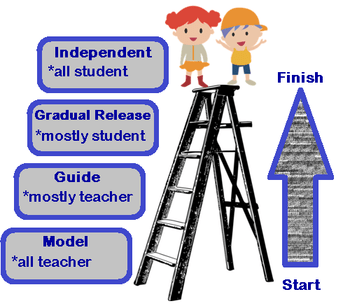
The nesting support provided was not enough. Or was it even appropriate? Two weeks may teach new people tricks but leaving them to do the job after that period is not ideal to create a sustainable growth. Trainers were not able to identify the zone of proximal development that will make them realize the correct scaffolds to provide. It would be best if this kind of support is backed by data or proof that such a method is effective and it drives the needed performance otherwise, the strategy/ scaffold is inappropriate. 

Based on my observed experience as a floor operations support, we can analyze the result of learning by asking ourselves the following questions:

  • Before conducting the training, was there a proper analysis of what needs to be taught?
  • Was the lesson designed based on the students’ capacity to learn and the availability of materials or technology to use?
  • Did the teacher/ trainer provide the appropriate scaffolding?
  • Was there enough scaffolding to sustain the learning?

Learning is not simply provision and acquisition of knowledge alone. It takes plenty of careful analysis of both the learner’s profile and the teachers’, too. Building the lesson or the knowledge is a tedious task which requires commitment from a competent teacher to ensure appropriate knowledge is imparted, timely feedback is given for continuous improvement and the evolution of students to becoming a more knowledgeable other (MKO).

This common pitfalls of BPOs is driven by a lot factors which is led by economic and financial reasons. The demand to deploy workers in order to generate income the soonest sacrifices the quality of work and the mental development of an employee towards the job. It may result to infractions and mistakes but the income that comes through outweighs the human factor to consider knowing that there could be potential cognitive overload due to complete disregard of the learner’s capacity.

I am lucky I belong to a company that opened plenty of avenues to learn and ample support from more knowledgeable others that is why growing with this kind of environment is sustainable and, in the long run, beneficial to the organization.

Rethinking Multitasking

I have this false perception that the more tasks I take, the smarter and the better I become. It was an old fashioned idea that enslaved me since I started my current role as a process coordinator. Naturally, I have a lot on my plate but I felt like I need to take in some more in order to prove my competence.

Unfortunately, it proved me wrong. Nowadays, it is extremely important that we value the effort that we put in the work that we do, hence, work smart. 

Multitasking is one of the abilities that we were culturally conditioned to do but the truth is, it will certainly overload your brainpower and your effectiveness in doing the more important task. Focus will be difficult and distractions will become more powerful. Studies have shown that multitasking can post real risk to mind and body.

According to Guy Winch Ph.D., in his article entitled 10 Real Risks of Multitasking, to Mind and Body, multitasking has become such a regular part of our lives that most of us believe we do it well—and few imagine it could actually be dangerous. Results are as follows:

  1. Multitasking is associated with harm to our brains
  2. Multitasking can lead to memory problems
  3. Multitasking can lead to increased distractibility
  4. Multitasking can make us walk into traffic
  5. Multitasking hurts your grades and the grades of those around you 
  6. Multitasking can lead to falling and breaking bones
  7. Multitasking can harm your relationship
  8. Multitasking increases chronic stress
  9. Multitasking increases depression and anxiety
  10. Multitasking makes you less productive and less efficient

After understanding Cognitive Learning Theory, I began to realize my own learning practices and strategies. I realized, it must be the reason why I have been burned out quite a lot and at times, my health deteriorates. Personally, I have not experienced memory loss but for sure, chronic stress is frequent.  These signs are the result of incorrect utilization of my brain power. All this time, I may have been experiencing cognitive/ information overload. 

Multitasking for me is a thing of the past. It was good that I made an effort to exhibit but now, I am determined to work smart and hard. It is my sentient responsibility to ensure that I take care of my health to nurture my learning capabilities. 

For real, this week was an eye opener for me. 

Reference:
Winch. G Ph.D.(n.d.). 10 Real Risks of Multitasking, to Mind and Body. Retrieved from: https://www.psychologytoday.com/us/blog/the-squeaky-wheel/201606/10-real-risks-multitasking-mind-and-body

10:10

Based from my manager’s actions and words, now I realize how important it is to ensure that each and every direct reports are in sane and in focus. That is what our monthly 10:10s are for.

The 10-minute one on one has been the practice of every manager to keep check every team member’s performance, career aspiration check, action plan application check and in order to make time to listen to the team member’s concern so that the manager is able to extend necessary help and action.

This is also one of the moment when the manager builds the direct report’s self-efficacy.

Self-efficacy is very crucial even to adult learners in the corporate world. It’s a human nature that expects social and psychological honing and molding to the push for what’s being aimed at. Motivation is such a powerful force that will totally fuel anyone to push forward.

From my personal experience, I truly appreciate the effort put in by my managers to help build my self confidence to go on and dream something big. With the 10:10s we had and plenty of talks, he made me realize that I can do more and I am ready to take on a bigger role. He motivated me to the point that I believe I can overcome and do better.

When I become an educator, helping students develop self-efficacy will be one of my focus goal. It worked for me and I should be able to device some ways to instill that in my students. With a strong sense of self-efficacy and self worth developed in the students, it will prepare them for the life’s bigger goals ahead during their adulthood.

Models and Mentors in My Life

My Models and Mentors

Role Models and MentorsTheir Contributions
My Mom Taught me to become financially independent
My Line Manager Showed me how to be compassionate and professional 
My ColleagueDisplays my dream financial discipline
My College Teacher Fuelled my learning curiosity and critical thinking

The type of role model I want to be for others

An educator who poses challenges ad questions to students to help them develop critical thinking
An educator who incorporates modern day technology to help students learn better with interest and enthusiasm
An educator who can show genuine compassion yet firmness in ensuring retention effectiveness 

I’ve been dreaming about teaching Natural Sciences. As an educator, I would love to utilize technology  and promote student engagement to ensure retention. I plan to do the following:

  1. I will encourage my students to utilize the internet to find for the recent most interesting science update to share to the class
  2. I will make use of learning videos related to the lesson of the day that can catch their attention 

Who will be my education mentor? What would my ideal education mentor be like?
I can recall clearly how my college professor influenced the way I kick started  my learning curiosity until today. She taught us not to be dependent on one or few sources of information. It is encouraged to refer to various materials to get plenty of perspectives. She was not sticking to the course syllabus but at the end of the semester, she makes sure that we learn what we have to learn in her course. She was my Journalism 101 professor that fuelled my never ending passion to explore and learn continually regardless of my current profession and age. 

What would your ideal education mentor be like?

My ideal education mentor is someone who explores new avenues and tools for learning. She does not adhere to the traditional and old ways but rather grows along with the modern day technology and learning styles. My ideal education mentor is someone who knows she has a huge part on the learner’s character development and future outlook in life.

Behaviorism @ Work

“Education is what survives when what has been learned has been forgotten.” ~B.F. Skinner~

I am glad I decided to take this subject as a starter because this can really help me with my current career growth. This is extremely helpful when it comes to understanding why people do what they did and say what they said! In a work environment where I interact with adults, Behaviorism can be observed and applied in so many levels.

Now, everytime I go to work and encounter an odd behavior from a direct report or a commendable action done by an associate, my brain riderects my description of the situation to the fact that this can be an example of a successful stimulus – response plan or a failed attempt. Whatever the outcome, I always see it as an opportunity to learn and know why.

For instance, in my current work setting, it is very common that some employees commit recurring mistakes of similar nature! Surprisingly, the manager already applied expected punishment but it seems like it is not working at all due to recurrence.

I realize that there are various factors affecting this result which might root to the fact that the manager was not able to establish a trusting relationship with his direct reports which lead to the ineffectiveness of the punishment applied. As adults, a simple stimulus-response = reward/ punishment does not work linearly. It has to be seen in various angles considering multiple factors. After all, human is capable of multiple intelligence, hence, must take into account the fact that there could be a number of reasons why we do not get the result of what we want.

As an aspiring people leader, that will be my personal key takeaway.

Understand your people, know them more, learn their history and connect personally in order to come up with the best viable stimulus for them to be motivated well and be encouraged to provide you the result that you need. This time, it’s all about knowing the subject and building a genuine trusting relationship to make things work as expected and even excel expectations. Then and truly then, behaviorism can be aided to work to our advantage.

Pacing

I can say, I am picking up the pace now.

This week, pacing and task management are the key factors why I was able to follow through the modules effectively and submitted my output on time!

What was reiterated in the orientation videos that we should learn ahead and always find time to allot few hours in a day to review and continue studying was truly very important. For someone like me who needs night shift job to keep while studying at the same time, it is crucial to manage tasks and resources wisely.

For two weeks in the program, aside from learning how to manage my time at work and for studying, I have developed a certain tenacity and genuine interest in following through my readings and even research some more outside of my study modules. I became more conscious of my writing skills and I started researching on how to write competitively or cite correctly.

I find this website, EasyBib (https://www.easybib.com/guides/citation-guides/how-do-i-cite-a/) very easy and convenient to use when learning how to cite a particular source. As our program requires plenty of writing, we have to understand the legal limitations of what we can do and learning more about plagiarism to keep us out of trouble (https://www.plagiarism.org/article/how-do-i-cite-sources).

What I genuinely love about the week is the self-learning and deep thinking experience with others through others. The experience will really help you open up to more ideas and will make you appreciate how others view things differently or similarly. You will enjoy the freedom of following the trail of your own thoughts and curiosity by fast researching online on your own space and time. Feels liberating.

Every week, the lessons are getting harder, readings increase in numbers and making time to study is becoming more tedious. It builds up the pacing that makes use of my adrenaline. Truly exhilarating!

Design a site like this with WordPress.com
Get started